
Thinking of Getting a Wood Burner in Your Conservatory, Orangery or Outbuilding? Here Are 8 Things to Consider
There’s something special about a real wood-burning stove. The warmth, the flickering flames and the cosy atmosphere can transform a room — and a stove can be particularly effective in a conservatory, orangery, garden room or outbuilding.
But before you choose your stove, there are several important things to consider.
From the size of the room and ventilation to the flue, hearth and location of the stove, getting the installation right from the beginning is essential.
At Chester Fireplace & Heating Centre, we regularly help homeowners choose and install wood-burning stoves, and our team can survey your property to make sure the proposed installation is suitable. Chester Fireplace & Heating Centre Ltd
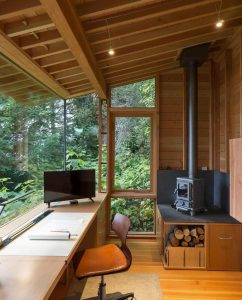
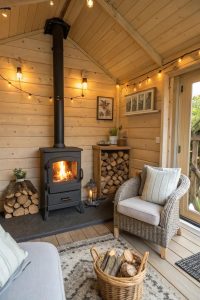
1. Is the room suitable for a wood burner?
The first question is whether the conservatory, orangery or outbuilding is suitable for a solid-fuel appliance.
A room with lots of glazing can lose heat quickly, but it can also become surprisingly warm once a wood burner is running. This makes choosing the correct stove size particularly important.
A stove that is too powerful may make the room uncomfortably hot and encourage you to run it at a lower setting than intended. Conversely, a stove that is too small may struggle to heat the space effectively.
Room volume, insulation, glazing, ceiling height and how the room is used should all be considered when selecting the heat output.
Our previous guide explains how room size and insulation can help determine the appropriate stove output. Chester Fireplace & Heating Centre Ltd
2. Where will the flue go?
One of the biggest considerations in a conservatory, orangery or garden room is the flue system.
Unlike installing a stove into an existing chimney, an outbuilding or glazed extension may require a purpose-designed flue system that passes through the roof.
The route of the flue needs to be carefully planned, particularly where it passes through roofs, ceilings or near combustible materials.
The Building Regulations cover the safe discharge of combustion products, air supply and protection of the building when installing combustion appliances. GOV.UK
This is one of the reasons a professional survey is so important before choosing your stove.
3. Don’t forget ventilation
A wood-burning stove needs an adequate supply of air for combustion.
This is particularly important in modern, well-sealed rooms and buildings where there may be limited natural air leakage.
Building Regulations require combustion appliances to have an adequate supply of air and appropriate provision for the discharge of combustion products. Legislation.gov.uk
Your installer should assess the room and determine what ventilation is required for the particular appliance and installation.
4. Think carefully about the hearth and surrounding materials
A stove generates considerable heat, so the hearth and surrounding area need to be suitable for the appliance.
This becomes particularly important in timber-framed garden rooms, wooden outbuildings and rooms containing combustible flooring or wall materials.
The installation needs to provide appropriate protection against heat and fire, with the hearth and surrounding construction meeting the relevant requirements. Approved Document J specifically covers protection of buildings, hearths, fireplaces, flues and chimneys. GOV.UK
This doesn’t mean a wood burner can’t be installed in a timber garden room — it simply means the installation needs to be designed correctly.
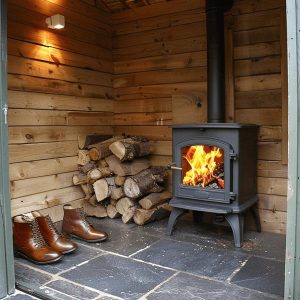
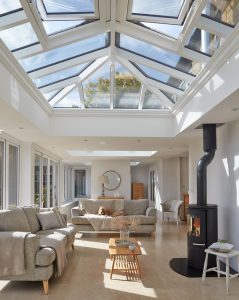
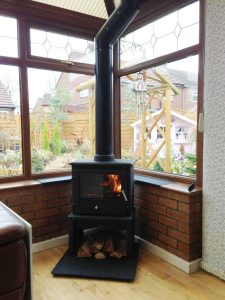
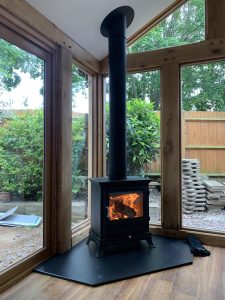
5. What type of stove should you choose?
There are lots of different wood-burning stoves available, from traditional cast-iron designs to sleek contemporary models.
For a conservatory or orangery, you may want something compact that doesn’t dominate the room.
For a larger garden room or outbuilding, a larger stove may be appropriate.
The important thing is not to choose a stove purely because you like the appearance.
The appliance needs to be suitable for the room, the flue system and the intended fuel.
At Chester Fireplaces, our wood-burning stove package can be customised with different stoves, hearths, chamber designs and beams, with installation carried out by a qualified HETAS/OFTEC registered installer. Chester Fireplace & Heating Centre Ltd
6. Are you in a Smoke Control Area?
This is particularly important if you’re considering burning wood.
Many areas of England are designated Smoke Control Areas. In these areas, you cannot simply burn wood on any stove. Wood can generally only be burned in an appliance that has the appropriate exemption, while authorised fuels can be used subject to the applicable rules. GOV.UK
Importantly, the rules can also apply to buildings such as summerhouses and other outbuildings with a chimney. GOV.UK
Before buying your stove, check whether your property is within a Smoke Control Area and make sure the appliance is suitable.
You should also only burn the fuels specified by the manufacturer. GOV.UK
7. Don’t forget the carbon monoxide alarm
Any solid-fuel installation needs appropriate consideration of carbon monoxide safety.
Approved Document J includes requirements relating to carbon monoxide alarms for combustion appliances in dwellings. GOV.UK
A carbon monoxide alarm is an important part of a safe installation, and your installer should advise you on the appropriate location and requirements for your appliance.
8. Get professional advice before you buy
Perhaps the biggest piece of advice we can give is:
Don’t buy the stove first and worry about the installation afterwards.
Every property is different.
A conservatory with a tiled roof will present different challenges to a timber garden room. An orangery with a solid roof may have completely different requirements again.
A professional survey allows the installer to assess:
- The size and construction of the room
- Insulation and glazing
- The proposed stove position
- Hearth requirements
- Flue route
- Ventilation
- Distance from combustible materials
- Smoke Control Area requirements
- Building Regulations considerations
- The appropriate stove output
At Chester Fireplace & Heating Centre, our process includes a free on-site survey to ensure the chosen fire or stove is suitable and can be installed safely. Chester Fireplace & Heating Centre Ltd
Could a Wood Burner Transform Your Conservatory or Garden Room?
A correctly installed wood-burning stove can turn a conservatory, orangery or garden room into a much more usable space throughout the cooler months.
Imagine sitting in your garden room on a cold evening, watching the flames while still enjoying views of the garden.
But the key is getting the stove, flue, ventilation and installation right.
If you’re considering a wood burner for your conservatory, orangery, garden room or outbuilding, speak to the team at Chester Fireplaces before you choose your appliance.
We have over 40 years’ experience supplying and installing fireplaces and stoves in Chester, Wirral and North Wales, with qualified HETAS/OFTEC installers and a showroom in Saltney. Chester Fireplace & Heating Centre Ltd
Chester Fireplace & Heating Centre
2 High Street, Saltney, Chester, CH4 8SE
01244 678714