
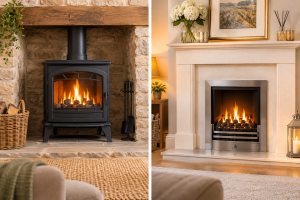
Gas Stove vs Traditional Gas Fire: Which Should You Choose for Your Home?
Are you thinking about upgrading your fireplace but cannot decide between a stylish gas-fired stove and a traditional gas fire?
Both options can transform your living room, create a welcoming atmosphere and provide additional heat when you need it. However, there are some important differences to consider before making your decision.
In this guide, we’ll compare gas stoves and traditional gas fires, looking at appearance, heat output, efficiency, installation and running costs to help you choose the right gas fire for your home.
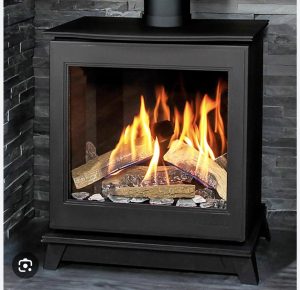
1. What Is a Gas-Fired Stove?
A gas-fired stove is designed to give you the traditional appearance of a wood-burning stove without the need to store logs, light a fire or clean away ashes.
Modern gas stoves offer realistic flames and glowing fuel beds, with many models available in traditional cast-iron styling or contemporary designs.
The benefits of choosing a gas stove include:
- Traditional wood-burning stove appearance.
- Convenient operation at the touch of a button.
- No logs or solid fuel to store.
- Less mess and maintenance than a real wood-burning stove.
- A range of styles and heat outputs.
- Models available for different flue arrangements.
A gas stove can be an excellent choice if you love the appearance of a traditional stove but want the convenience of gas.
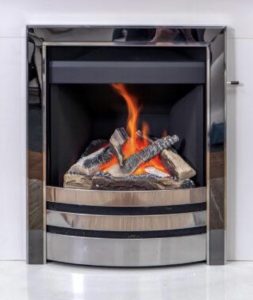
2. What Is a Traditional Gas Fire?
A traditional gas fire is usually fitted into an existing fireplace opening or installed as part of a new fireplace design.
There are many styles available, from classic coal-effect fires to modern glass-fronted models with realistic log effects.
The benefits of a traditional gas fire include:
- A wide choice of traditional and contemporary designs.
- Options to suit existing fireplace openings.
- Models with realistic coal or log-effect fuel beds.
- Inset designs that make excellent use of available space.
- Convenient heating without handling solid fuel.
A traditional gas fire may be the better option if you want a neat, built-in fireplace that complements your existing living room.
3. Gas Stove vs Traditional Gas Fire: What Are the Main Differences?
The biggest difference is often appearance and installation rather than the fuel itself.
A gas stove gives you the look of a freestanding stove, whereas a traditional gas fire generally creates a more integrated fireplace appearance.
When comparing the two, consider the following:
Appearance: A gas stove creates a cosy, traditional focal point. An inset gas fire can give your room a more classic or streamlined finish.
Space: A gas stove normally takes up more visible floor or hearth space. An inset fire sits within the fireplace opening.
Heat output: Both types are available in different heat outputs. Choose a model that is appropriate for the size and heating requirements of your room.
Efficiency: Do not assume a stove is automatically more efficient than a gas fire. The individual appliance design matters. Glass-fronted, room-sealed appliances can offer better efficiency than many open-fronted fires.
Installation: Your existing chimney, flue, gas supply and room requirements will determine which models are suitable.

4. Which Is More Efficient: A Gas Stove or a Gas Fire?
Efficiency is one of the most important considerations when choosing a new gas appliance.
Generally, a modern glass-fronted gas fire or room-sealed gas stove can offer good efficiency because the combustion system is enclosed.
Traditional open-fronted gas fires can lose more heat through the chimney.
However, it is important to compare the manufacturer’s efficiency figures for the exact models you are considering.
Look at:
- The appliance’s efficiency rating.
- Its gas input and useful heat output.
- The room size it is designed to heat.
- Its expected running costs.
- Whether it has a glass front or an open combustion system.
Remember, the most efficient appliance is not necessarily the best choice if it produces too much or too little heat for your room.
5. Which Gas Fire Looks Best in Your Living Room?
This is where personal preference comes into play.
A gas stove works particularly well in:
- Traditional cottages.
- Farmhouse-style living rooms.
- Homes with stone or brick fireplace openings.
- Rooms where you want a strong focal point.
A traditional inset gas fire can work particularly well in:
- Homes with existing fireplace surrounds.
- More contemporary living rooms.
- Smaller rooms where floor space is limited.
- Rooms where you want a classic fireplace appearance.
Both can look fantastic when matched with the right fireplace surround and interior design.
6. Installation and Gas Safety
Before purchasing any gas stove or gas fire, it is essential to check that the appliance is suitable for your property.
Your existing chimney or flue, ventilation, gas supply and room size can all affect which appliance can be installed.
Always use a suitably qualified Gas Safe registered engineer for gas installation and servicing.
Gas appliances should be regularly maintained, with annual servicing recommended. Never block ventilation openings or ignore problems with a chimney or flue.
7. So, Which Should You Choose?
There is no single answer because both appliances have their advantages.
Choose a gas-fired stove if:
- You love the traditional wood-burning stove appearance.
- You want a cosy focal point.
- You prefer a free standing design.
- You want the convenience of gas without handling logs.
Choose a traditional gas fire if:
- You prefer an integrated fireplace design.
- You want to make use of an existing fireplace opening.
- You have limited floor space.
- You prefer the appearance of a classic or contemporary inset fire.
Final Thoughts: Finding the Right Gas Fire for Your Home
Whether you choose a gas-fired stove or a traditional gas fire, the right appliance can make a wonderful difference to your living space.
The important thing is to choose a model that suits your home, provides the heat you need and offers the appearance you love.
Before making your final decision, get professional advice on your chimney, flue and installation requirements.
Still unsure whether a gas stove or traditional gas fire is right for you? Get in touch for advice and help finding the perfect fireplace for your home.