
What Heat Output Do I Need for My Log Burner or Gas Fire to Heat My Room?
Choosing the right log burner or gas fire isn’t just about finding a design you love. One of the most important things to consider is the heat output, measured in kilowatts (kW).
Choose an appliance with too little heat output and your room may never feel warm enough. Choose one that’s too powerful and you could find yourself sitting in an uncomfortably hot room, constantly turning the fire down.
So, how do you work out what heat output you need to heat your room effectively?
Let’s take a look.
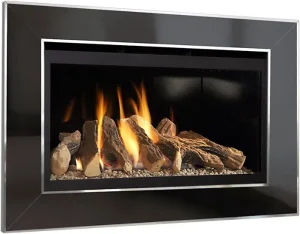
What does kW mean when choosing a fire?
The heat output of a log burner or gas fire is measured in kilowatts (kW).
In simple terms, the higher the kW output, the more heat the appliance can deliver into your room.
You’ll commonly find fires with outputs such as:
- 3kW – ideal for smaller rooms.
- 4kW – suitable for smaller to medium-sized rooms.
- 5kW – a popular choice for many average-sized living rooms.
- 6kW – suitable for larger rooms or rooms with greater heat loss.
- 7kW and above – often suited to larger spaces and open-plan areas.
These are general examples, not fixed room-size recommendations. The correct output depends on your room and how well your home retains heat.
How do I calculate the heat output I need?
One of the easiest ways to estimate the heat output required is to calculate the volume of your room.
You will need three measurements:
- The length of your room.
- The width of your room.
- The height of your ceiling.
Measure everything in metres.
Multiply the three measurements together:
Length × Width × Height = Room volume in cubic metres (m³).
For a reasonably insulated UK home, a useful starting guide is to divide the room volume by 14.
Room volume ÷ 14 = Approximate heat output required in kW.
Example: Calculating the heat output for a living room
Let’s say your living room measures:
- Length: 5 metres
- Width: 4 metres
- Height: 2.4 metres
5 × 4 × 2.4 = 48m³.
Now divide 48 by 14:
48 ÷ 14 = 3.43kW.
You would therefore be looking at an appliance with a nominal heat output of approximately 3.5kW to 4kW, subject to a proper assessment of the room.
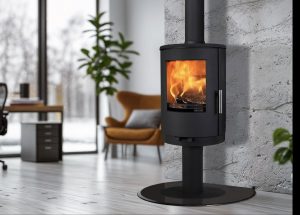
Does insulation affect the heat output I need?
Absolutely!
Two rooms of exactly the same size can require very different heat outputs depending on how well insulated they are.
Here is a useful rule-of-thumb guide:
- Poor insulation: Divide the room volume by 10.
- Average insulation: Divide the room volume by 14.
- Good insulation: Divide the room volume by 24.
For example, a room measuring 48m³ could have very different heating requirements:
| Insulation | Approximate output |
|---|---|
| Poor | 4.8kW |
| Average | 3.4kW |
| Good | 2kW |
These calculations are estimates rather than a substitute for a professional heat-loss assessment.
Other things that can affect your heating requirements include:
- Single or double-glazed windows.
- High ceilings.
- Large patio doors.
- External walls.
- Draughty doors and windows.
- Open staircases and adjoining rooms.
- Whether your home has cavity wall or loft insulation.
What size log burner do I need?
When choosing a wood-burning stove, it’s important to look at the appliance’s nominal heat output.
This is the manufacturer’s stated output under normal operating conditions.
A common mistake is buying a larger stove because you think more kilowatts must mean better heating.
However, an oversized log burner can make your room too hot. Constantly running a stove at a low setting to reduce the heat can also affect how cleanly and efficiently it burns.
It’s generally better to choose a stove that is correctly sized for your room and can operate within its intended output range.
Always check the manufacturer’s specifications and speak to a qualified HETAS installer before making your final choice.
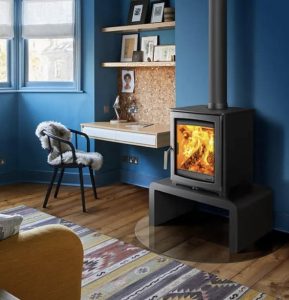
What size gas fire do I need?
The same principle applies when choosing a gas fire.
Gas fires are available in different heat outputs, and the right model will depend on the size of your room, insulation and heat loss.
It’s also important to check the actual heat output rather than confusing it with the gas input rating.
Gas input describes the energy consumed by the appliance, whereas heat output tells you how much heat it delivers into the room.
A correctly sized gas fire should provide comfortable warmth without overheating the space.
The type of gas fire, flue arrangement and available ventilation must also be considered. Always use a Gas Safe registered engineer for gas installation and servicing.
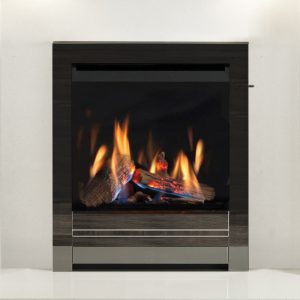
Is a bigger kW fire always better?
No!
Buying the biggest fire you can afford isn’t necessarily the best option.
An appliance that’s too powerful can:
- Make your living room uncomfortably hot.
- Need to be turned down frequently.
- Operate outside its ideal burning conditions.
- Result in less comfortable and potentially less efficient heating.
Likewise, an appliance that’s too small may struggle to heat your room, particularly during colder weather.
Getting the heat output right from the beginning can make a big difference to your comfort and enjoyment.
Let us help you choose the right fire
If you’re considering buying a new log burner or gas fire, don’t guess the heat output.
Take the time to measure your room, consider your insulation and look at the manufacturer’s nominal heat output.
A professional assessment can help you choose an appliance that suits your home, your heating requirements and your lifestyle.
Remember: the best fire isn’t necessarily the biggest one. It’s the one that’s the right size for your room!
Get in touch if you need help choosing the right log burner or gas fire for your home.
Frequently Asked Questions
What kW log burner do I need for an average living room?
Many average-sized living rooms may need approximately 3kW to 5kW, depending on room volume, insulation and heat loss.
Is a 5kW log burner enough to heat a room?
It can be more than enough for some living rooms, but the correct output depends on the room dimensions, insulation and layout.
Can a log burner be too big for a room?
Yes. An oversized stove can make the room excessively hot and may be operated inefficiently if continually turned down.
Do gas fires and log burners use the same kW measurements?
Both use kilowatts to describe heat output, so their stated outputs can be compared. However, their operating characteristics and installation requirements are different.
How do I know which fire is right for my home?
Calculate your room volume, assess the insulation and consider other sources of heat loss. For a reliable recommendation, arrange an assessment with a suitably qualified installer.